
Gordon-ramsay-venison-wellington. Just saying those words out loud brings a smile to my face, and a slight tremor of excitement to my hands, even after years of cooking. There’s something truly magical, almost legendary, about a well-executed Wellington, especially when you’re channeling the master himself, Gordon Ramsay. I remember the first time I attempted one – a Beef Wellington, actually – and let’s just say it was… a learning experience. The pastry was soggy, the beef overcooked, and I almost swore off ever trying again. But that’s the beauty of Ramsay’s approach, isn’t it? It’s about precision, passion, and pushing yourself to create something truly spectacular. And trust me, if I can learn to conquer the Wellington, you can too, especially with this wild game twist that elevates everything to a whole new level.
Why Gordon Ramsay’s Venison Wellington is a Game Changer
You might be wondering, “Why venison?” and “Why Ramsay’s way?” Well, for starters, venison brings an incredible depth of flavor that’s both earthy and robust, a perfect counterpart to the rich duxelles and flaky pastry. It’s leaner than beef but still incredibly tender when cooked right, making it a surprisingly elegant choice. For me, a huge Gordon Ramsay fan, his methods aren’t just about Michelin stars; they’re about building confidence in the home kitchen. He breaks down complex dishes into manageable steps, focusing on technique and quality ingredients. This isn’t just a meal; it’s an event, a culinary triumph that will have your family or dinner guests raving for weeks. It’s an unforgettable, bold, and delicious meal that proves you don’t need fancy tools or a cooking school diploma to create something extraordinary right in your real home kitchen here in Austin.
The Heart of the Feast: Ingredients
When it comes to a showstopper like a Wellington, the quality of your ingredients isn’t just important – it’s paramount. Think of each component as a character in a play; they all need to be top-notch to deliver a stellar performance. You’ll want the freshest venison loin you can find, plump mushrooms, and good quality puff pastry. Don’t skimp on these; they are the foundation of your success.
Mastering Your Wellington: Tips & Tweaks
Over the years, after many Wellingtons (some more successful than others, yes, it happens), I’ve picked up a few crucial tips that make all the difference. First, chill, chill, chill! Every single component needs to be properly chilled before assembly, and the assembled Wellington needs a solid rest in the fridge before baking. This prevents the pastry from getting soggy and helps it cook evenly. Second, the duxelles must be dry. Cook out all that moisture, or you’re inviting a soggy bottom disaster. Third, searing your venison perfectly is non-negotiable – it locks in flavor and creates that beautiful crust. Finally, invest in a good meat thermometer. It’s your best friend for hitting that perfect medium-rare. Don’t guess; know!
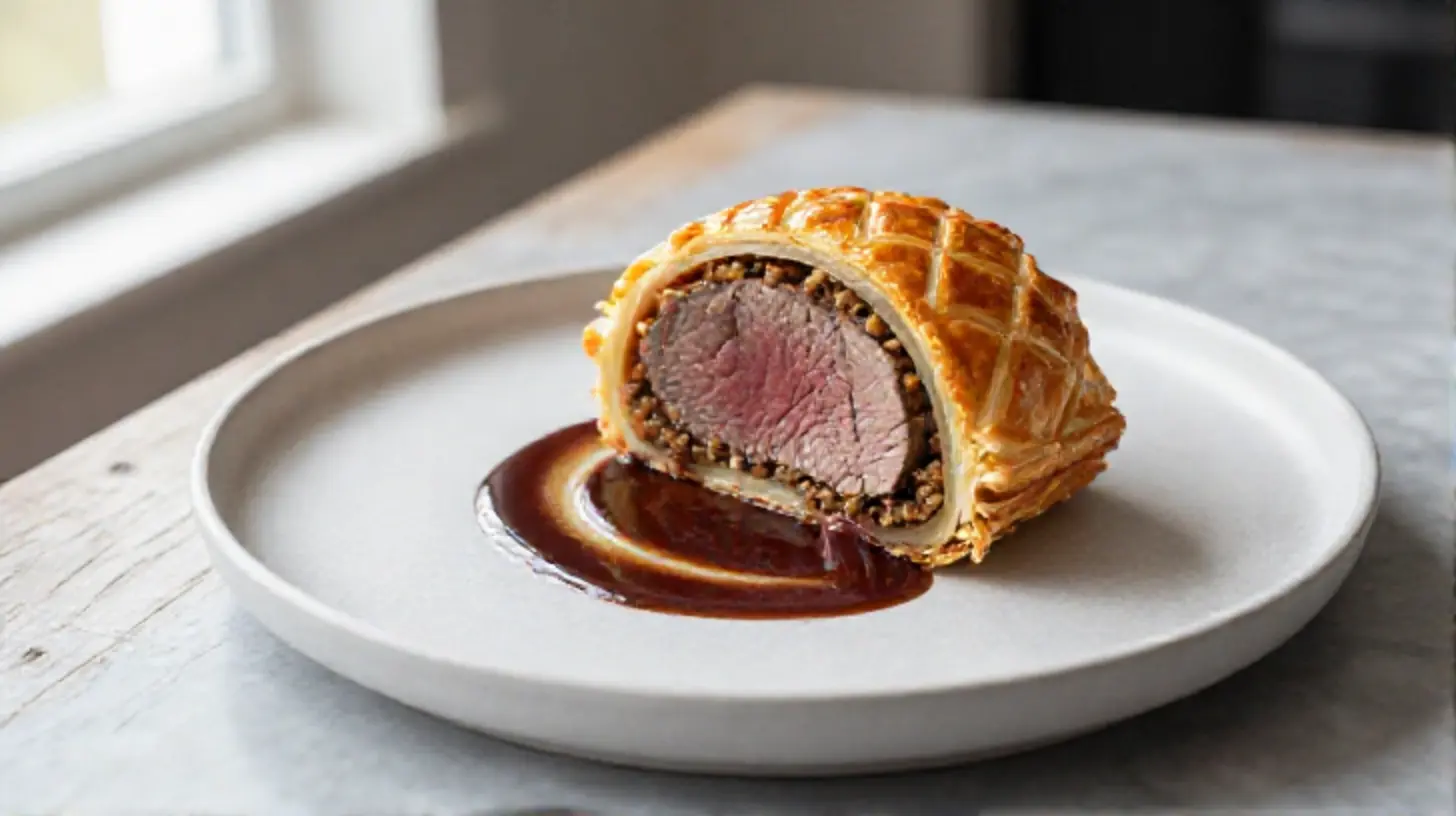
Crafting Your Gordon Ramsay Venison Wellington: The Steps
This is where the magic happens, where simple ingredients transform into a masterpiece. Don’t be intimidated; take it one step at a time, and you’ll be amazed at what you can achieve.
Step 1 : Prepare the Venison
Pat the venison loin completely dry. Season generously with salt and freshly ground black pepper. Heat a large, oven-safe skillet over high heat with a touch of olive oil. Sear the venison on all sides until deeply browned, about 1-2 minutes per side. Remove from heat, brush with Dijon mustard, and let it cool completely. Then, wrap tightly in plastic wrap and chill in the fridge for at least 30 minutes.
Step 2 : Make the Duxelles
Finely chop mushrooms (cremini or button work great) and shallots. In the same skillet, melt butter over medium heat. Add the mushrooms and shallots, cooking until all the moisture has evaporated and the mixture is dark and fragrant. This takes patience, about 15-20 minutes. Season with thyme, salt, and pepper. Spread the duxelles on a plate to cool completely.
Step 3 : Assemble the Wellington Base
Lay out several overlapping slices of prosciutto (or pancetta) on a large sheet of plastic wrap, forming a rectangle large enough to enclose the venison. Spread the cooled duxelles evenly over the prosciutto.
Step 4 : Wrap the Venison
Place the chilled, seared, and mustard-coated venison loin at one end of the duxelles-covered prosciutto. Using the plastic wrap, carefully roll the prosciutto and duxelles tightly around the venison, forming a compact log. Twist the ends of the plastic wrap to seal it tightly, like a giant candy wrapper, and chill in the fridge for at least 20 minutes (or longer). This helps it hold its shape.
Step 5 : Encase in Pastry
On a lightly floured surface, roll out your puff pastry into a rectangle large enough to completely encase the venison log. Unwrap the venison log and place it onto the pastry. Brush the edges of the pastry with egg wash. Carefully bring the pastry over the venison, sealing the edges tightly. Trim any excess pastry, ensuring a neat seam on the underside. You can use any pastry scraps to create decorative patterns on top. Brush the entire surface with egg wash. Chill again for at least 30 minutes.
Step 6 : Bake to Perfection
Preheat your oven to 400°F (200°C). Place the chilled Wellington on a baking sheet lined with parchment paper. Brush with another layer of egg wash. Bake for 25-30 minutes, or until the pastry is golden brown and a meat thermometer inserted into the thickest part of the venison reads 125-130°F (52-54°C) for medium-rare.
Step 7 : Rest and Serve
This is perhaps the most important step! Once out of the oven, let the gordon-ramsay-venison-wellington rest for at least 10-15 minutes before slicing. This allows the juices to redistribute, ensuring tender, succulent meat. Slice into thick portions and serve immediately.
Serving Up Your Culinary Triumph
A dish this impressive deserves equally thoughtful accompaniments. I love serving my venison Wellington with something simple yet elegant, letting the main event shine. Creamy mashed potatoes are a classic choice, soaking up any delicious juices. Roasted root vegetables, like carrots and parsnips, or steamed green beans tossed with a bit of butter and lemon zest, offer a lovely contrast in texture and freshness. For a sauce, a rich red wine reduction or a simple port wine jus complements the venison beautifully without overpowering it. This is a dish for special occasions – holidays, anniversaries, or just when you want to truly impress.
Delicious Variations
While the classic gordon-ramsay-venison-wellington is phenomenal, there’s always room to play and make it your own.
Herb-Crusted Venison Wellington
Before searing the venison, roll it in a mixture of finely chopped fresh herbs like rosemary, thyme, and sage. This adds an aromatic layer that pairs wonderfully with the venison’s rich flavor.
Spicy Duxelles Twist
Introduce a hint of heat to your duxelles! Add a pinch of red pepper flakes or a finely minced jalapeño to the mushroom mixture for an exciting, subtle kick that complements the game meat.
Alternative Game Meats
If venison isn’t available, or you fancy trying something different, you can adapt this recipe for other game meats like wild boar loin or even high-quality lean beef tenderloin for a more traditional beef Wellington.
Common Wellington Mistakes (and How to Avoid Them)
We’ve all been there, staring at a beautiful dish that just didn’t quite turn out. When it comes to Wellington, a few common pitfalls can trip up even experienced cooks.
- Soggy Bottom: This is the arch-nemesis of all Wellingtons. The main culprits are wet duxelles and not chilling the assembled Wellington sufficiently. Ensure your duxelles are very dry, and always chill the Wellington for at least 30 minutes before baking to firm up the pastry and create a barrier.
- Overcooked Venison: Venison is lean and can dry out quickly. Use a meat thermometer! Aim for 125-130°F (52-54°C) for medium-rare, remembering it will continue to cook a bit after it comes out of the oven.
- Pastry Tears: This usually happens if the pastry isn’t rolled out evenly, or if the venison log isn’t compact enough. Be gentle, and ensure the log is tightly wrapped in prosciutto and plastic wrap during chilling.
- Uneven Baking: If your pastry isn’t golden all over, your oven might have hot spots. Consider rotating the baking sheet halfway through cooking. Also, make sure the oven is fully preheated to the correct temperature.
Storing Your Masterpiece
While a Wellington is always best enjoyed fresh out of the oven, you might have leftovers (though unlikely!). Store any cooled, leftover slices in an airtight container in the refrigerator for up to 2-3 days. To reheat, wrap loosely in foil and warm gently in a preheated oven at 300°F (150°C) until heated through, about 15-20 minutes, being careful not to overcook the venison.
You’ve Got This!
There you have it. The guide to creating your very own gordon-ramsay-venison-wellington. This dish, once intimidating, becomes an absolute joy to create when you break it down, focus on technique, and trust your instincts. Remember that first overcooked Beef Wellington I mentioned? Well, through practice and embracing Ramsay’s spirit, I’ve moved past those culinary mishaps to truly savor the process and the delicious results. So go on, cook boldly, play around, and have fun in the kitchen. I know you’re going to absolutely nail this one, and the look on your guests’ faces will be worth every moment.
Your Gordon Ramsay Venison Wellington Questions Answered
Is gordon-ramsay-venison-wellington difficult to make for a home cook?
While it has a few steps, it’s not inherently difficult. The key is to be organized, follow the instructions carefully, and not rush the chilling steps. With patience and good quality ingredients, a home cook can definitely achieve a fantastic result.
Can I prepare the venison Wellington ahead of time?
Yes, you absolutely can! You can assemble the entire Wellington, up to the point of baking, and store it tightly wrapped in plastic wrap in the refrigerator for up to 24 hours. Just make sure to bring it out of the fridge about 30 minutes before baking to allow it to come slightly closer to room temperature.
What temperature should the venison be cooked to?
For a perfect medium-rare, aim for an internal temperature of 125-130°F (52-54°C) when you remove it from the oven. Remember, it will continue to cook a few degrees as it rests. A meat thermometer is essential here.
How do I prevent the puff pastry from becoming soggy on the bottom?
The main defense against a soggy bottom is to ensure your mushroom duxelles are cooked until very dry, with absolutely no moisture left. Additionally, thoroughly chilling the assembled Wellington before baking helps create a firm barrier, and a hot oven ensures the pastry cooks quickly and crisps up.
Can I use frozen puff pastry for this recipe?
Yes, high-quality store-bought frozen puff pastry works wonderfully for this recipe. Just make sure to thaw it completely in the refrigerator according to package directions before you begin rolling it out. Quality matters here, so choose a brand you trust.
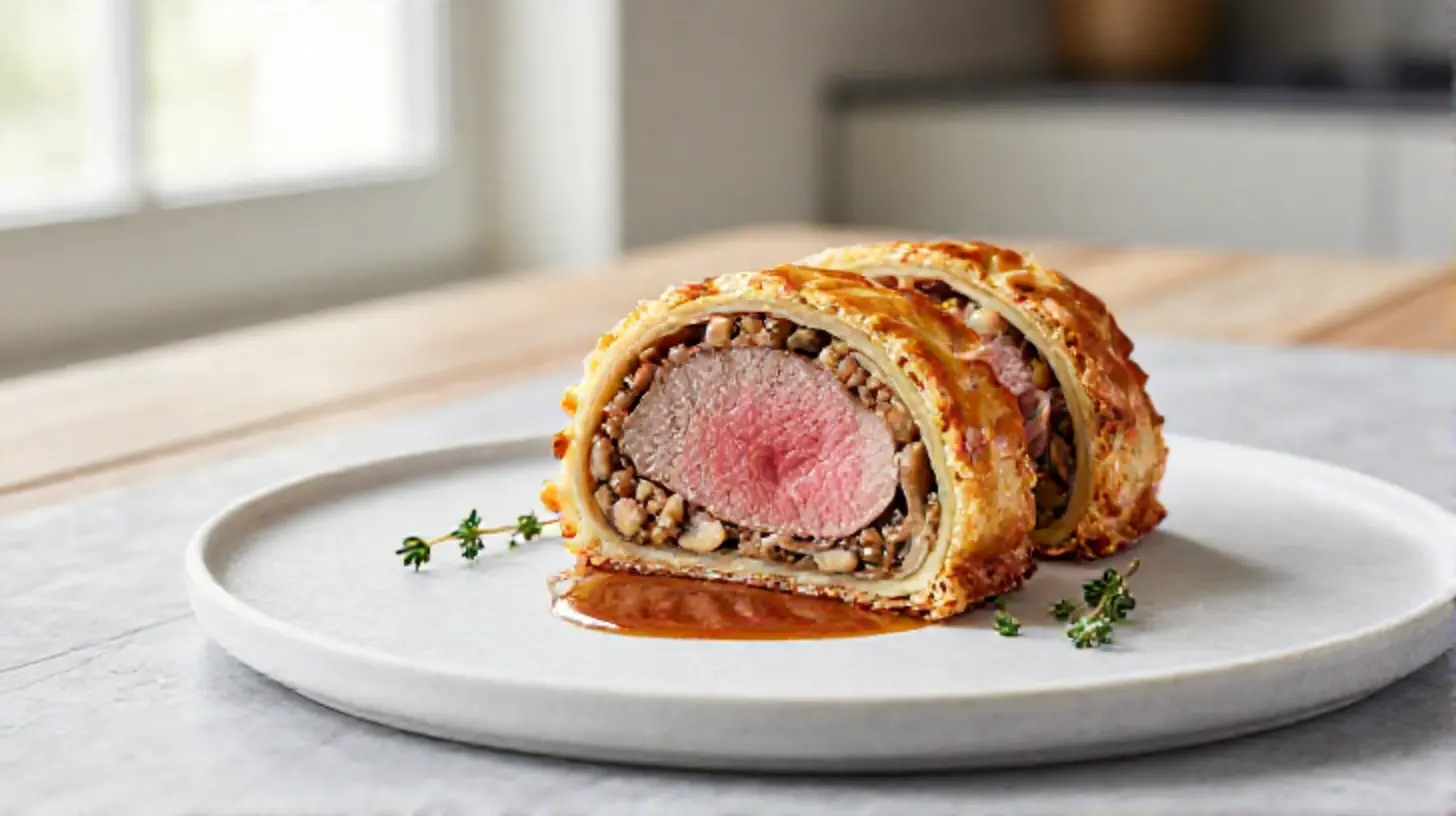
Gordon Ramsay Venison Wellington
Ingredients
Equipment
Method
- Season the venison loin generously with salt and freshly ground black pepper.
- Heat 1 tablespoon of olive oil in a heavy-based pan (or use your gordon ramsay food on sauté mode) over medium-high heat. Sear the venison on all sides until nicely browned, about 2-3 minutes per side. Remove from heat and brush all over with Dijon mustard. Let it cool completely.
- For the mushroom duxelles: In the same pan, melt the butter over medium heat. Add the finely chopped mushrooms, shallots, garlic, and thyme. Cook, stirring frequently, until all the moisture has evaporated and the mixture is dry and deeply flavorful, about 10-15 minutes. Season with salt and pepper and let it cool completely.
- Lay out a large piece of cling film on your work surface. Arrange the Parma ham slices, slightly overlapping, into a rectangle large enough to wrap the venison.
- Spread the cooled mushroom duxelles evenly over the Parma ham. Place the cooled, mustard-coated venison loin in the center. Using the cling film, carefully bring the ham and duxelles over the venison, forming a tight log. Twist the ends of the cling film to secure and refrigerate for at least 30 minutes to firm up.
- Preheat your gordon ramsay food (or oven) to 200°C (390°F). Lightly flour your work surface and roll out the puff pastry into a rectangle large enough to encase the venison log.
- Unwrap the venison log from the cling film and place it in the center of the puff pastry. Bring the pastry up and over the venison, carefully sealing the edges. Trim any excess pastry, ensuring a neat package. Place the Wellington seam-side down on a baking tray lined with parchment paper.
- Brush the entire surface of the pastry with the beaten egg wash. You can score the top lightly with a knife for decoration, being careful not to cut all the way through.
- Bake in your gordon ramsay food for 25-35 minutes, or until the pastry is golden brown and puffed, and the venison is cooked to your desired doneness (medium-rare typically, check with a meat thermometer if preferred, 55-60°C for medium-rare).
- Remove the Wellington from the gordon ramsay food and let it rest for at least 10 minutes before slicing into thick portions and serving.
Nutrition
Notes
Tried this recipe?
Let us know how it was!Exploring Diverse Wellington Interpretations
While venison offers a robust flavor, the Wellington concept also beautifully accommodates seafood. For a luxurious alternative, consider preparing a decadent lobster Wellington, combining delicate flavors with the signature pastry crust.
Another popular seafood rendition is Gordon Ramsay’s elegant salmon Wellington recipe, providing a lighter yet equally impressive main course option.
For those seeking a plant-based version, Gordon Ramsay also created a vibrant beetroot Wellington dish, showcasing the versatility of this classic preparation.
Taming the Untamed: Gordon Ramsay’s Venison Wellington, A Masterclass in Savory Elegance
Wow, even just thinking about the aroma filling the kitchen as that pastry crisps around the rich venison makes my day! There’s something truly magical about pulling off a dish as magnificent as Gordon Ramsay’s Venison Wellington, isn’t there? It’s not just food; it’s a whole culinary adventure. If you’ve ever attempted this magnificent creation, I’m dying to hear every detail – what was your favorite part of the process? Did you add your own little twist that made it uniquely yours? Share your stories and photos in the comments below; let’s celebrate our shared passion for bringing Gordon’s genius to our own tables!